What Pascha is
Pascha (from the Hebrew Pesach, Passover) is the feast of Christ's Resurrection, the passing from death to life. The Church calls it the Feast of Feasts, and everything else in the year leads to it or follows from it. St Paul says, "If Christ is not risen, then our preaching is empty and your faith is also empty" (1 Corinthians 15:14).
Orthodox Pascha is calculated according to the Church calendar and the rule of the First Ecumenical Council: it falls on the first Sunday after the first full moon following the spring equinox, and after the Jewish Passover. That is why it often does not coincide with the Western Easter. In 2027 the Western Easter is on 28 March and Orthodox Pascha is on 2 May.
The night service
The service begins late on Saturday night, with the Midnight Office, during which the church is nearly dark and the plashchanitsa, the shroud of Christ, is carried to the altar. Shortly before midnight, the lights are put out, and the clergy and people go out of the church with candles, singing "Thy Resurrection, O Christ our Saviour".
They go round the church once, and stop at the closed doors. The priest sings "Christ is risen from the dead", the doors open, and the people enter a church that is full of light. The Paschal Matins follows, with the Paschal Canon of St John of Damascus and the homily of St John Chrysostom, and then the Liturgy.
The greeting
From that night until the Ascension, Orthodox Christians greet each other with "Christ is risen!" and answer "Truly He is risen!" (in Slavonic, Khristos voskrese! Voistinu voskrese!), and exchange a threefold kiss on the cheeks or a handshake. It can be said in any language.
The Paschal hymn is repeated again and again: "Christ is risen from the dead, trampling down death by death, and upon those in the tombs bestowing life." The Church does not argue for the Resurrection in the service; it announces it.
The traditions around it
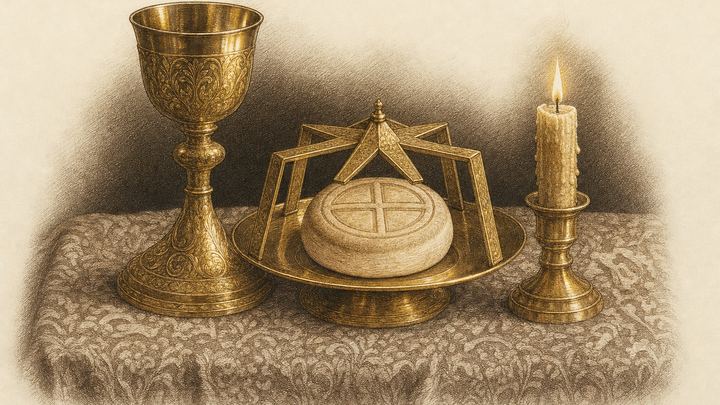
After the Liturgy, the faithful break the fast with the blessed Paschal food: eggs painted red (a tradition connected to St Mary Magdalene), kulich (Paschal bread) and paskha (a sweet cheese dish). The food is blessed in church, usually after the service or on Holy Saturday. People often stay for the meal together.
Bright Week, the week after Pascha, is treated as one continuous feast. The Royal Doors of the iconostasis stay open all week, there is no fasting even on Wednesday and Friday, and the services are sung in the Paschal manner.
What Holy Week asks first
Pascha is the end of a road. Great Lent and especially Holy Week come first: the Palm Sunday entrance, the Bridegroom services, the Passion Gospels on Holy Thursday, the burial service on Good Friday (Holy Friday) and the Vigil of Holy Saturday. Many Orthodox Christians say that Pascha cannot be properly received if one has not come through Holy Week.
If you cannot attend all of it, come to as much as you can. The Good Friday service and the Paschal night are the ones to prioritise.
Coming for the first time
Anyone may come, and visitors are welcome. The night service is long, usually three or four hours, and is often held in a full church; people stand, and it is fine to sit if you need to. Bring a candle, dress modestly, and expect to be given light from someone else's flame. If you do not know what to do, watch the people next to you and ask afterwards. The clergy are glad to explain.
Check the parish calendar and the WhatsApp group for the exact times, which are announced before Holy Week.