How do Orthodox Christians pray?
Orthodox prayer has two sides that belong together. There is the prayer of the whole Church in the services, above all the Divine Liturgy on Sundays and feast days, and there is the prayer of the individual at home. The home prayer is not a replacement for the Church but a preparation for it and an echo of it. Christ's own counsel is to go into your room, shut the door and pray to the Father in secret (Matthew 6:6 listen in the Audio Bible), and St Paul tells Christians to pray without ceasing (1 Thessalonians 5:17 listen in the Audio Bible).
Most people begin with a short, steady routine, usually called a prayer rule, which consists of fixed prayers said morning and evening. The word rule in Orthodoxy does not mean a legal burden. It is a trellis, a measure that keeps prayer from disappearing on tired days. The details below are a general outline, and your parish priest can adapt them for your family, your health and your work. If you are new to church life, you may also like Orthodox parish life: what to expect.
What is a simple morning and evening prayer rule?
Orthodox prayer books contain a set of morning prayers and a set of evening prayers. They usually begin with the sign of the cross and the invocation of the Trinity, and include the Trisagion ("Holy God, Holy Mighty, Holy Immortal"), the Lord's Prayer, a prayer to the Holy Spirit, the Creed, and short prayers of thanks, repentance and intercession for the living and the departed. The full rules can take fifteen to thirty minutes, which is too long for many beginners.
A sensible start is a shortened rule. Take the Lord's Prayer, a prayer to the Holy Spirit, the Creed, and one or two of the prayers from the book, then add a Psalm and the names of those you want to pray for. The rule is better short and regular than long and abandoned. Some writers advise reading the prayers over beforehand, reflecting on their meaning, and gradually learning them by heart. Over time, with your priest's blessing, you can add prayers. The Fathers repeat that a few prayers said with attention are worth more than many said in a rush.
What is the Jesus Prayer and how do I say it?
The Jesus Prayer is the short prayer, "Lord Jesus Christ, Son of God, have mercy on me, a sinner." Its roots are in the Gospel: the tax collector who stood far off, would not lift his eyes and said, "God, be merciful to me, a sinner" (Luke 18:13 listen in the Audio Bible), went home justified, and the blind men called out to Jesus for mercy. The prayer was developed by the monks of the desert and later of Mount Athos, and many Orthodox Christians use it at home, on the way to work or at night.
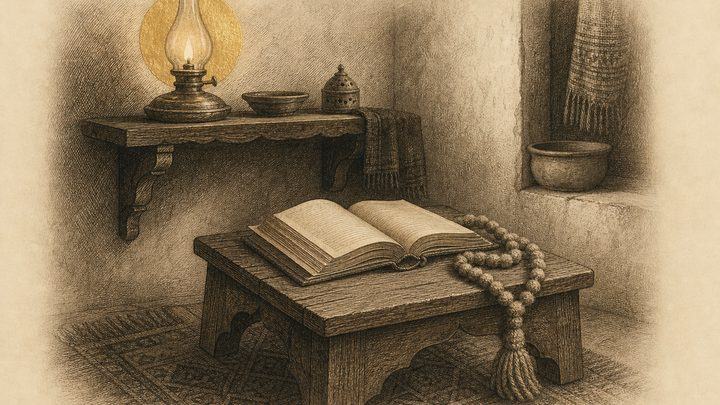
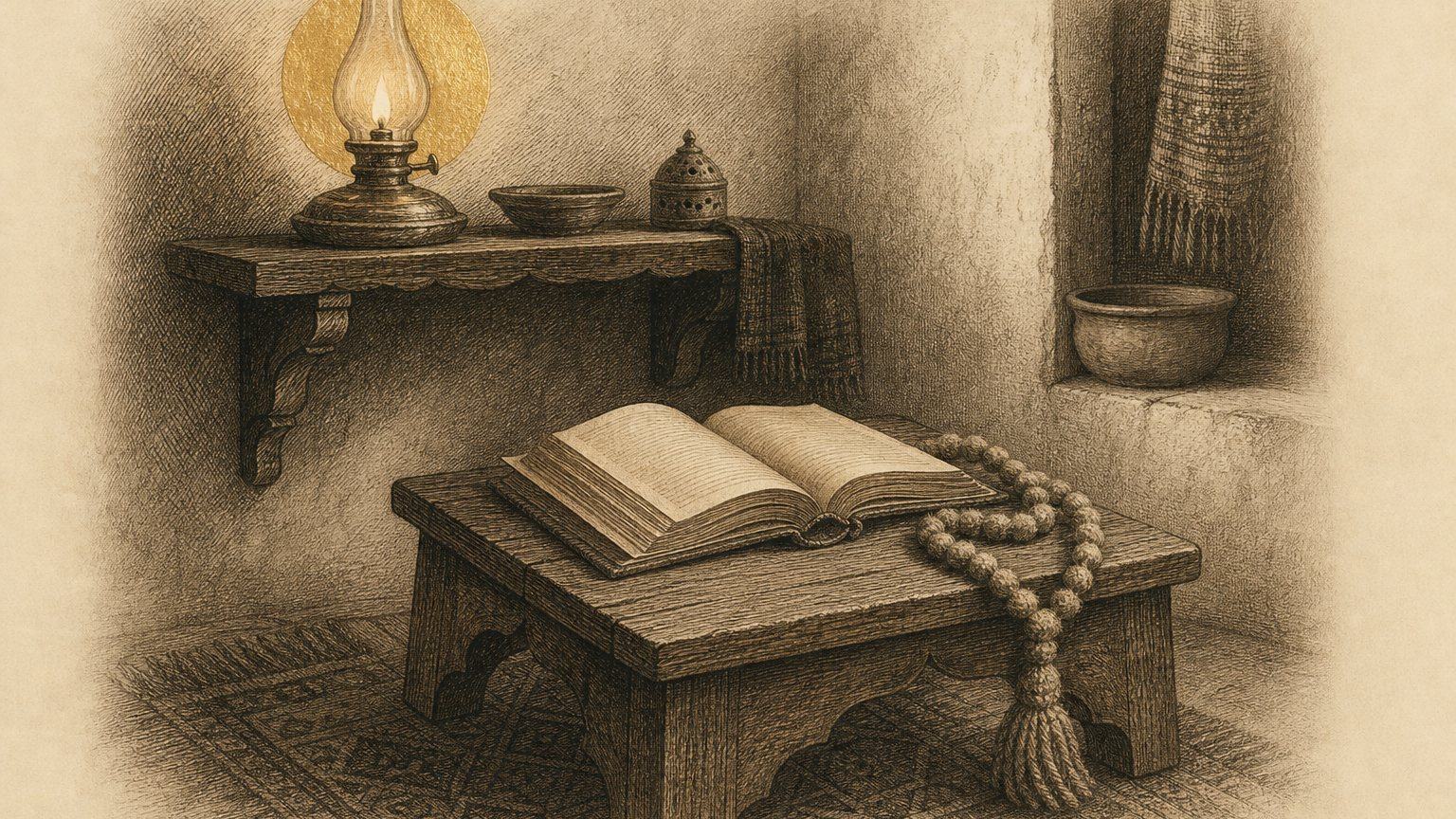
To begin, find a quiet place, stand or sit, and say the words slowly. Many people use a prayer rope, a loop of knotted cord, often of wool, with 33, 50 or 100 knots, and say one prayer for each knot. The rope is not a magic object but a help for counting and for keeping the hands and mind engaged. Do not force a particular breathing technique or an unusual sensation. Spiritual writers warn beginners against exotic methods and ask them to follow ordinary instruction from a priest or confessor. For why this matters, see What is prelest?
Can I pray in my own words?
Yes, and you should. Fixed prayers give us the voice of the Church and the words of saints, but a person who never speaks to God in his own words will feel that prayer belongs to somebody else. After the fixed prayers, speak plainly: thank God for the day, name your worries and your sins, ask for help for people you know. Short and sincere words are welcome. The Church teaches that God hears the heart, and that we do not have to impress Him.
A simple pattern is thanks, repentance, petition, intercession. Thank God for something concrete. Name something you have done or failed to do. Ask for what you need, and pray by name for family, friends, enemies and the departed. For the departed, see Why Orthodox Christians pray for the dead. When your own words feel flat, return to the Psalms, which give words to joy, fear, guilt and trust.
How do the Psalms fit in?
The Psalms are the prayer book of the Bible, and the Church's services are full of them. Orthodox Christians use the Septuagint numbering, so what many Western Bibles call Psalm 51 is Psalm 50, the great psalm of repentance (Psalm 50 listen in the Audio Bible), and Psalm 23 is Psalm 22. In the monastic tradition the Psalter is divided into twenty sections called kathismata, read through weekly, and in Great Lent more often. A beginner can read one Psalm a day, or choose one that matches the day.
Two Psalms are especially suited to beginners. Psalm 62 is a morning prayer of longing for God, and Psalm 90 asks for His protection (Psalm 90 listen in the Audio Bible). If reading is hard, listen instead: the Audio Bible has the Psalms in the Septuagint numbering, so you can follow along while standing in front of your icons. Hearing the same texts that the Church sings at services builds a quiet connection between home and church.
Where and how should I stand? The icon corner and posture
Orthodox homes traditionally have a prayer corner: a shelf or a small table, often on the east side of a room, with an icon of Christ, an icon of the Mother of God, perhaps an icon of a saint, and a small lamp or candle. The corner is not decoration but a place where the family faces God together. See Why Orthodox churches have icons for what icons mean. If space is limited, one icon on a shelf is enough, and the lamp should be kept safe, especially in a small flat or a hot climate.
Posture is secondary to attention. The tradition prefers to stand for prayer, with the sign of the cross and bows at the end of prayers, and to sit if one is ill or tired. Prostrations are common in Lent, and a few bows are enough on other days. Turn off your phone, begin with a brief silence, and name before whom you stand. The Orthodox view is that prayer is made with the body as well as the mind, since the body is also created and saved by God.
What if prayer feels dry or I keep getting distracted?
Almost everyone who prays experiences distraction and dryness, and the Fathers speak about it as normal. When the mind wanders, bring it back gently without anger and without telling yourself that you have failed. When prayer feels empty, do not give it up. Remain faithful in the short rule, and remember that feelings are not the measure of prayer. The Lord told His disciples a parable about praying always and not losing heart (Luke 18:1 listen in the Audio Bible).
Practical steps are modest. Begin with five minutes. Choose a fixed time, perhaps after waking and before sleep. Keep the book and rope where you can reach them. Confess your struggles in confession, as explained in Why confess your sins to a priest?, and ask for a rule that suits your life. Attend the Sunday Divine Liturgy when you can, and find the times on the Liturgy page and the feasts on the church calendar. A related practice is described in Orthodox fasting, which supports prayer. For anything personal, speak to your priest.