How does the Orthodox Church understand death?
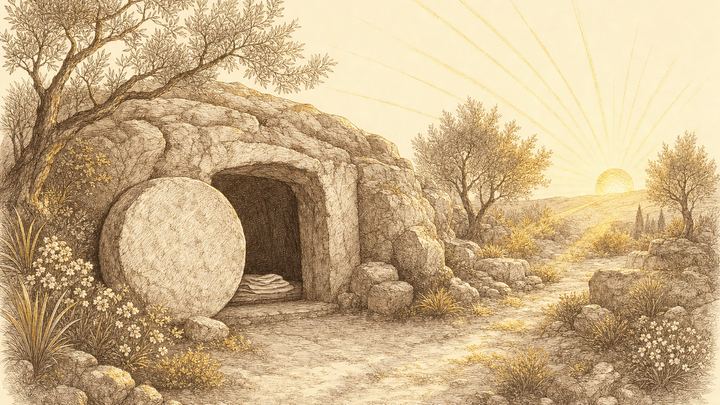
For Orthodox Christians death is real, painful and not the final word. Christ said to Martha at the tomb of her brother, "I am the resurrection and the life" (John 11:25 listen in the Audio Bible), and then he raised Lazarus. Saint Paul tells the Thessalonians not to grieve "as others do who have no hope" (1 Thessalonians 4:13 listen in the Audio Bible). The funeral service holds both truths together: it allows tears, and it sings the hope of resurrection. Paul adds that Christ is risen as the first fruits of those who have fallen asleep (1 Corinthians 15:20 listen in the Audio Bible).
The Church does not teach that the soul simply vanishes or that the body is unimportant. The body was baptised, anointed and fed with the Eucharist, and it will rise at the last day. This is why Orthodox funerals treat the body with great reverence, and why the Church generally prefers burial. How the soul fares between death and the resurrection is a mystery on which the Church speaks with restraint; see what happens to the soul after death and the particular and the last judgment.
A good death, in the Orthodox tradition, is one prepared for by a life of repentance. In the litanies of the Church we ask for a Christian ending to our life, painless, blameless and peaceful, and for a good defence before the dread judgment seat of Christ. That is the hope that surrounds the dying person: confession, Holy Communion and, where possible, the anointing of the sick.
What should a family do when someone is dying or has died?
Call the priest as early as possible, ideally while the person is still conscious, so that he may hear confession, give Holy Communion and anoint the sick with oil. You can also ask him to read the prayers for the departing soul. The practice of confession is described in confession in the Orthodox Church. Praying daily is the best preparation for such a time; see how to pray in the Orthodox way.
After death, the family should again contact the priest before making final arrangements, so that the date and time of the service can be agreed with the church. The Church usually prays over the departed at the home, the funeral parlour or the church on the evening before the funeral; this is often the Trisagion service, sometimes with the reading of the Psalter through the night. Family and friends are invited to stay and pray.
In Singapore the practical steps include the medical certificate and registration of death, the funeral director and the arrangements for a wake.
What happens at an Orthodox funeral, step by step?
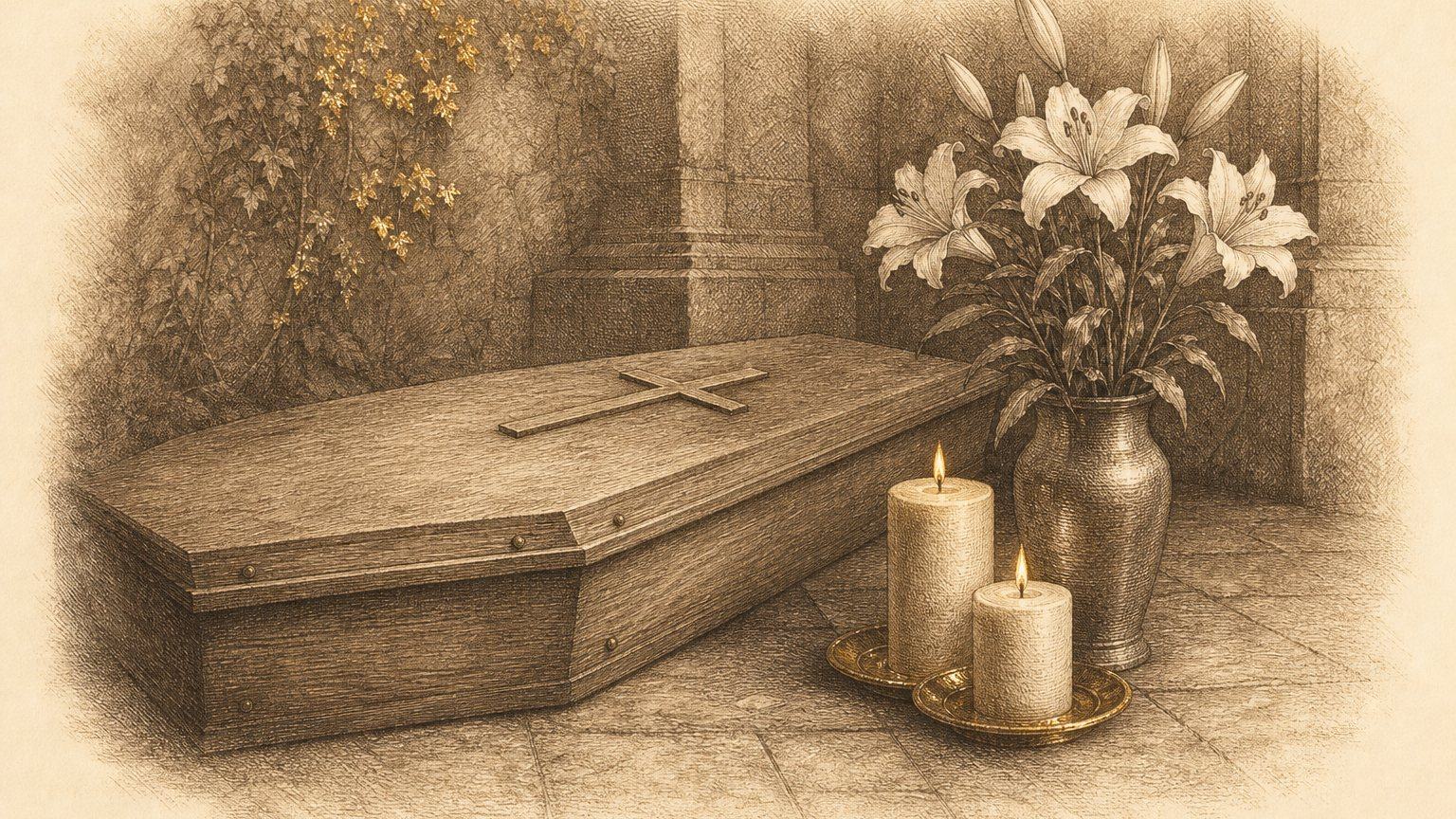
The usual shape is as follows. First comes the Trisagion service for the departed, often the evening before. Then, on the day, the funeral service itself is served in church, with the coffin in the middle and four candles placed around it in the shape of a cross. In the Orthodox tradition the coffin is normally open, and the faithful hold lit candles during the service.
The service is made up of psalms, litanies, the hymns of the departed and a reading from the Epistle and Gospel. Near the end the priest gives the prayer of absolution, which in the Slavic tradition is placed in the hand of the departed. Then the family and the congregation come forward for the last kiss, a farewell to the person who is about to be buried.
The coffin is then closed, and the procession goes to the cemetery or crematorium. At the grave the priest blesses it and pours earth in the shape of a cross on the body, then the people sing "Memory Eternal", asking God to remember the departed for ever. A meal of fellowship (the makaria or memorial meal) often follows, in which the guests share stories and remember the person.
What are the memorials on the 3rd, 9th and 40th days?
After the funeral, the Church continues to pray. Memorial services, called the panikhida in Slavic usage, the parastasis, or the mnemosyno in Greek, are celebrated on the third, ninth and fortieth days after death, and again on the anniversary. According to Orthodox Wiki, the Apostolic Constitutions mention these times, and many parishes still keep them. The third day is linked with the Resurrection of Christ on the third day, and the fortieth with the days between Pascha and the Ascension.
In practice the day need not fall exactly on the date, because a service in which the congregation takes part is often held at the nearest weekend. The fortieth-day service is the one most widely kept in the diaspora.
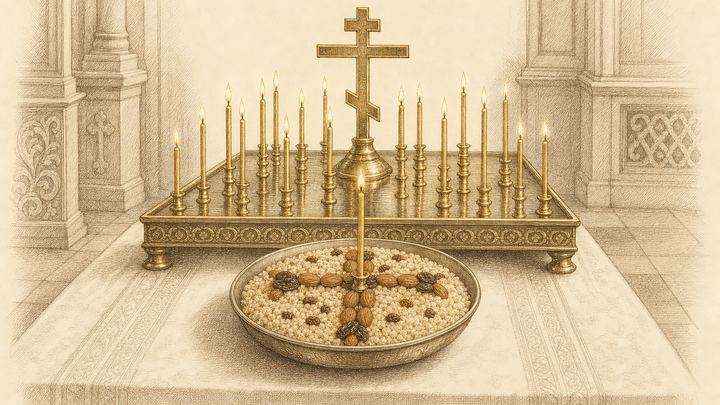
At a memorial service the family often brings kollyva (boiled wheat with honey and sugar, decorated), which is blessed by the priest. The wheat recalls Christ's words that a grain of wheat must fall into the ground and die in order to bear fruit (John 12:24 listen in the Audio Bible), and so it is a food of resurrection hope. After the service the kollyva is shared with those present.
What are the Saturdays of the dead, and what are commemoration notes?
The Church sets aside certain Saturdays in the year for prayers for all those who have fallen asleep, because Saturday is the day on which Christ lay in the tomb. In the Slavic tradition the best known are the Saturday before Meatfare Sunday, the second, third and fourth Saturdays of Great Lent, the Saturday before Pentecost (Trinity Saturday), and Dimitri's Saturday in autumn. On Radonitsa, the Tuesday after Thomas Sunday, many people visit the graves of loved ones. The church calendar gives the dates each year.
On these days, and on any ordinary Sunday, you may hand the priest a commemoration note, often called a poministe: a small list of first names, with the living on one list and the departed on another. The names of the departed are read at the proskomedia of the Divine Liturgy, and a particle of bread is taken out for each name. Only baptised Orthodox Christians are named in the liturgical commemoration, but you may of course always pray for anyone privately.
The reasons for this, and the biblical and patristic foundations for praying for the departed, are explained in why Orthodox Christians pray for the dead. The memorial table with its candles is also the place where you can light a candle for the departed; see why Orthodox Christians light candles for how this is done.
Does the Orthodox Church allow cremation, and what about suicide?
The Church's preference is for burial. According to the Orthodox Church in America, cremation is permitted only in extenuating circumstances and with the blessing of the bishop, and no Orthodox tradition promotes it. The reason is respect for the body, which was the temple of the Holy Spirit and will be raised. In a place like Singapore, where land is scarce and burial plots are limited, many families face this question in a concrete way. Please speak to the priest early.
Suicide is a painful subject and deserves a gentle answer. The Church regards taking one's own life as a grave tragedy, and traditionally the full funeral service was not served for those who had died by their own hand. At the same time the Church recognises that many people who die in this way are suffering from mental illness or from overwhelming despair, and that only God knows the heart. Pastoral practice varies, and the decision lies with the bishop.
If you are in this situation, please speak to the priest in confidence. Private prayer for the person is always possible, and the Church does not forbid it. The mercy of God is greater than our understanding, and the Church's pastoral concern is first of all for the family left behind. If you are yourself struggling with thoughts of ending your life, please seek help from a doctor or a crisis service as well as a priest.
How can I help the departed, and the family, in practice?
The best gifts to the departed are prayer, almsgiving and the Divine Liturgy, in which the Church remembers them by name. Light a candle, give a commemoration note, attend the memorial services, and give alms in their memory. The Book of Revelation gives the Church her hope: that God will wipe every tear from every eye, and that death will be no more (Revelation 21:4 listen in the Audio Bible).
For the family, practical help counts as much as prayer: meals, errands, a visit, a phone call weeks after the funeral when others have gone back to their lives. Listening to the Psalms or the Gospel of John in the Audio Bible can also be a quiet consolation.
If you are a visitor to an Orthodox funeral, dress modestly, arrive on time, and follow the family's lead. You need not cross yourself or sing, but you are welcome to stand and pray. You can also read more about the services of the Church at the liturgy page.