What does obedience mean in an Orthodox monastery?
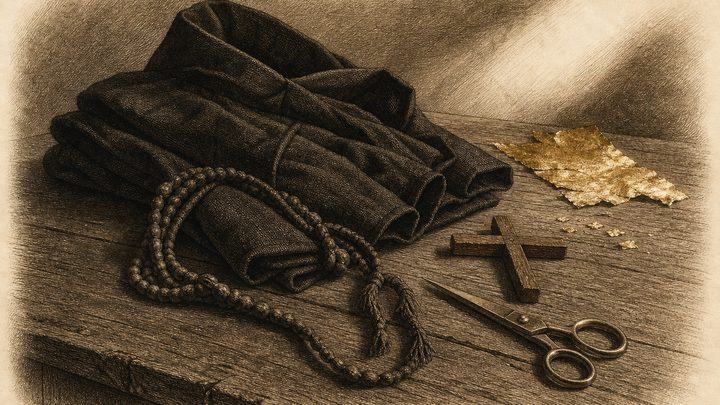
The Greek word is hypakoe, which means literally a listening under: to hear something and act on it. The Slavonic equivalent, poslushanie, has the same root as the verb “to listen”, and the Russian word is used in a second sense as well. A monastic task, whether washing pots, baking bread or copying a list of names, is itself called “an obedience”. A novice asked what his obedience is means, in plain language, what work he has been given.
The classic monastic life rests on three promises: obedience, non-possession and chastity. Of these, tradition treats obedience as the most basic, because it deals with the root of the other two. A man who gives up money but not his will has kept the one thing that matters most to him. For the wider picture of the monastic calling, see Why do people become monks and nuns?
The word obedience carries heavy associations today, from military discipline to the abuses of authoritarian groups. Orthodox writers do not ignore that. They argue that obedience in the Church is a free and loving act, and it is only because it is freely given that it can be of any use.
Why do novices start in the kitchen and the bakery?
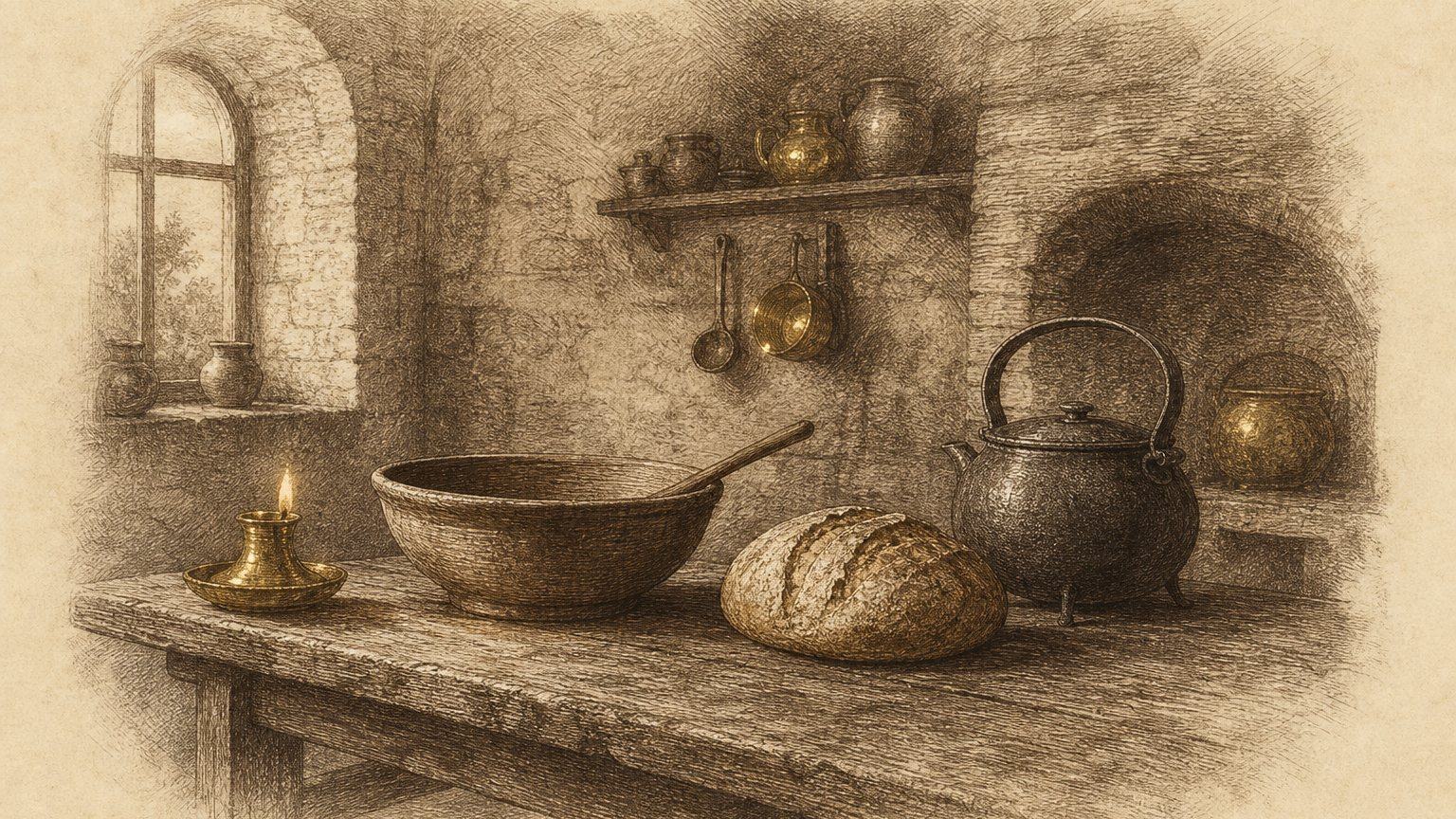
A newcomer to a monastery does not begin with a seminar on prayer. He is given tasks: the kitchen, the bakery, the cleaning, the vegetable garden, the stable, the guesthouse. A novice is a person on probation, and the stage before tonsure is described in The stages of monastic tonsure.
The reason is practical and psychological as much as spiritual. Many of the passions that trouble a man in prayer are exposed by ordinary work: irritation at a slow colleague, pride in a skill, resentment at being told to do something that seems pointless, the wish to be thanked. In the quiet of a cell these things hide; at the sink they come into the open. Monastic writers often remark that prayer is tested by how a man behaves in the kitchen.
The work is also a way of learning not to be the author of one's own day. A novice who is told to leave a task half-finished and go to help elsewhere is being taught that the work was never the point. The point was the person, and what is being formed in him is attention to others and trust. This is why the monastic tradition describes obedience as a school, with its own slow curriculum, rather than as a set of rules.
Is monastic obedience about freedom or servility?
The Orthodox answer is that it is meant to lead to freedom. Self-will, in the tradition's view, is not freedom but a kind of captivity to impulses, moods and vanity: a man who always does what he wants is largely at the mercy of what he happens to want. By cutting off that self-will, the monk hopes to learn the freedom of loving God and neighbour.
This theme is old. Abba Dorotheus of Gaza, a monk of the sixth century who trained under the elders Barsanuphius and John near Gaza, left a set of spiritual instructions to his own community, and among them are warnings against trusting one's own judgment. St John Climacus (about 600), writing at Sinai, gave the fourth step of his Ladder of Divine Ascent to “blessed and ever-memorable obedience”, and he defines it in terms of a movement made without arguing and a death freely accepted (Ladder, Step 4, in the standard English translation). Both writers treat obedience as medicine for a specific illness: the habit of putting oneself at the centre.
Modern teachers say the same in different words. Bishop Kallistos Ware has written that a true guide does not break the will of the disciple but receives it as a gift. A gift cannot be taken by force; and that is the first limit of monastic obedience, since a monastery in which people were compelled would have destroyed the very thing it exists to cultivate.
Why is obedience at the centre of the Gospel?
The monastic tradition does not invent obedience; it takes it from Christ. The apostle writes that Christ “became obedient unto death, even death on a cross” (Philippians 2:8 listen in the Audio Bible), and the same letter presents this as the pattern of the Christian mind. In Gethsemane he prays, “not my will, but yours, be done” (Luke 22:42 listen in the Audio Bible). The letter to the Hebrews adds that, though he was a Son, he “learned obedience through what he suffered” (Hebrews 5:8 listen in the Audio Bible).
Obedience here is not the opposite of love; it is the form love takes in the Son's relation to the Father. The Church fathers saw in it the reversal of Adam's choice. Adam grasped, and the new Adam gave. The humility the monastic tries to practise is the same humility, described at length in Humility in Orthodox Christianity.
The Gospel of Luke records that, after the episode in the temple, the boy Jesus went down with his parents and “was obedient to them” (Luke 2:51 listen in the Audio Bible). Even in the family at Nazareth, the pattern was the same. Whatever else is said of monastic obedience, its ground is the example of Christ.
Where are the limits of obedience?
The limits are as important as the practice. Obedience is not owed to a command to sin. When the council forbade the apostles to preach, Peter answered: “We must obey God rather than men” (Acts 5:29 listen in the Audio Bible). No abbot has authority to order what the Gospel forbids, and a novice who is told to lie, steal or harm another is not bound. Church writers also say that an instruction which damages health, family duties or conscience should be questioned openly, not simply carried out.
The Fathers add a second limit: the guide himself is a fellow servant, not a prophet. The tradition, as summarised by Bishop Kallistos, warns against treating an elder as an oracle and notes that the guide may be mistaken. Several Orthodox saints, St Seraphim of Sarov among them, are reported to have said that they themselves were sometimes wrong when they spoke from their own minds rather than from grace. A disciple who surrenders judgment altogether becomes easy prey for illusion. The danger is described in Spiritual deception (prelest).
Finally, the total offering of the will belongs to a monastery, where it is given in a known community to a known abbot over years. Orthodox teachers insist that it cannot be demanded of laypeople by a parish priest, and that a relationship that makes a person fearful, dependent or unable to decide anything on his own is a reason to step back and ask advice from someone else. If you are in that position, speak to your confessor or bishop.
How can a layperson practise obedience without vows?
The vows are for monastics, but the Gospel's call to obey is for everyone. The letter to the Hebrews says: “Obey your leaders and submit to them, for they are keeping watch over your souls” (Hebrews 13:17 listen in the Audio Bible). The lay Christian lives this in a quieter form: by attending the services he has agreed to attend, by keeping the fasts of the Church, by confessing regularly and by accepting a priest's counsel as counsel, weighed against Scripture and the Fathers. Orthodox fasting is the most common school of obedience for lay people, since the rule is set by the Church and not by one's appetite.
A good deal of lay obedience is also found in ordinary duties. A parent who gets up at night, a worker who finishes a dull task well, a spouse who gives way in a small matter are all doing what the novice does in the kitchen. The Fathers would call this the unnoticed training of the will. The rite of repentance, in which a Christian names his failures before a priest, is also a form of it: see Why confess your sins to a priest?
For someone considering a closer relationship with a spiritual father, the sensible course is the one recommended by the Church: to take time, to observe the fruit of the man's life, and to begin with ordinary counsel. See The spiritual father and the elders.
What can anyone take from this tradition?
Two things stand out. First, the willingness to be corrected is a sign of health and not of weakness, and a person who cannot take direction from anyone is rarely free in the sense he supposes. Second, obedience is not a way of avoiding responsibility. The monastic tradition asks more of the conscience than it removes from it, since the disciple must also discern, in prayer, when a command is a command he can follow.
Hearing the Gospel read aloud is a good place to start practising the listening that lies at the root of the Greek word. You can follow the services in the liturgy page and the church year in the church calendar, and listen to the passages quoted here in the Audio Bible. The memoir Everyday Saints and Other Stories touches on monastic obedience in several chapters, but this article rests on the Fathers and Scripture, not on the book.