Why would anyone choose to become a monk or a nun?
The shortest Orthodox answer is that a person has heard Christ's call and wishes to follow it without reserve. Monastics do not claim that married Christians are second-class, nor that the world is bad. They say that the same Gospel which calls most people to family life calls a few to give everything to prayer and service, and that a person who is sure of that call should not decline it.
The call is described in the Gospels in plain terms. To the rich young man Christ says: “If you would be perfect, go, sell what you possess and give to the poor ... and come, follow me” (Matthew 19:21 listen in the Audio Bible). When Peter says that the disciples have left everything, Jesus promises that none who has done so for his sake will go without a hundredfold reward (Mark 10:28-30 listen in the Audio Bible). He also says that whoever does not renounce all that he has cannot be his disciple (Luke 14:33 listen in the Audio Bible). Monastics take these sentences more literally than most of us do, and that is the whole of their programme.
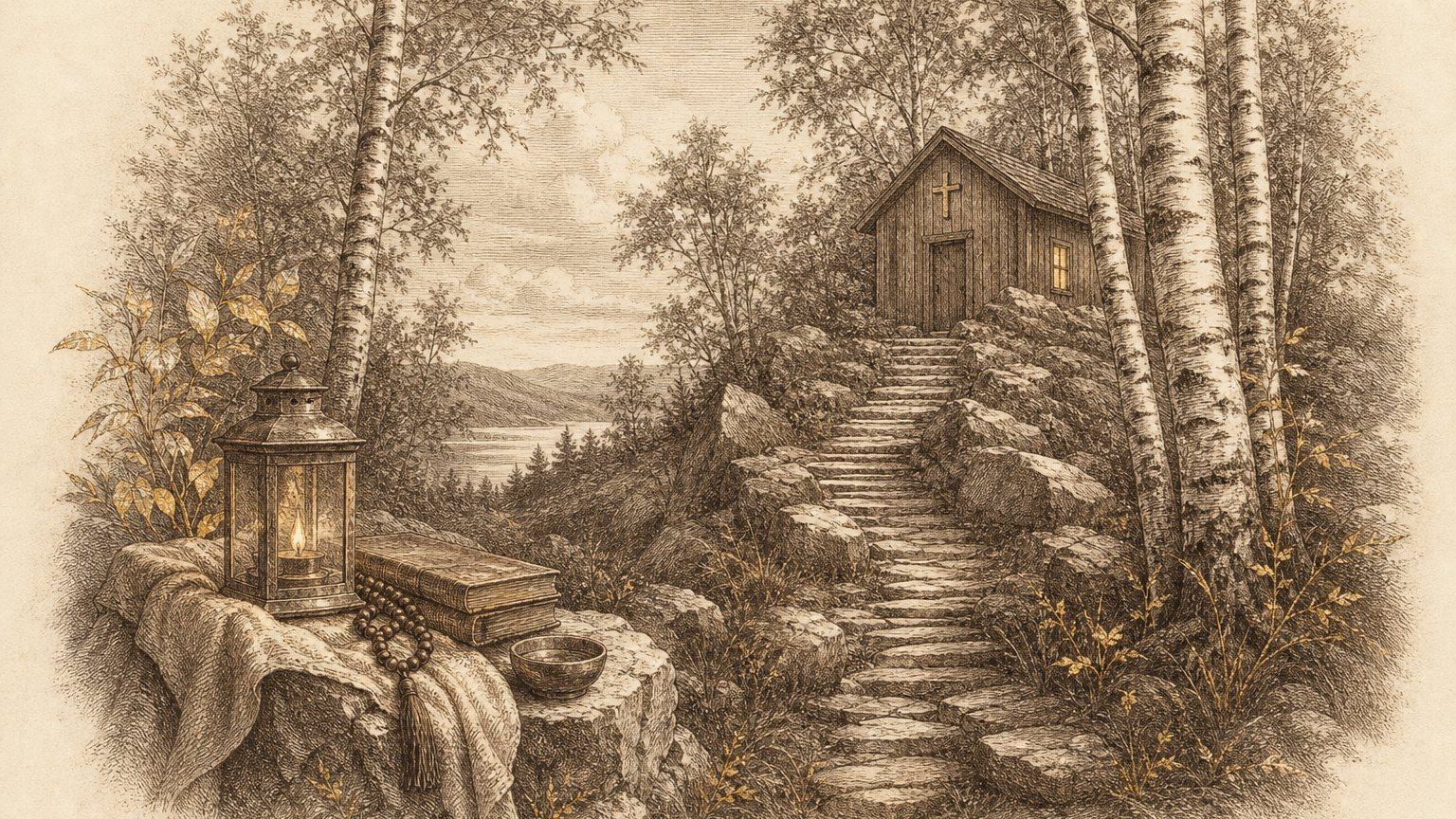
St Paul adds a practical remark, that the unmarried person can be anxious about the affairs of the Lord, how to please the Lord, without division of interest (1 Corinthians 7:32-35 listen in the Audio Bible). The monastic life is organised around that single undivided attention. Christ himself withdrew to lonely places to pray (Luke 5:16 listen in the Audio Bible), and the monastic tradition follows that example.
Is monasticism an escape from life?
This is the first common misunderstanding, and the tradition has an answer for it. People do sometimes arrive at a monastery running from something: a broken marriage, a failed career, grief. Experienced abbots and abbesses know this and test for it. A person who comes only to escape usually discovers within weeks that he has brought himself along, with every habit and resentment, into a smaller room with fewer distractions.
Orthodox writers therefore describe the monk as a person who has not left the struggle but has chosen its hardest form. The desert fathers called the life a warfare against the passions, and the early monks spoke of it as a martyrdom without bloodshed. A man who enters a monastery to avoid people soon learns that the community is the hardest part. The same is true of fear of failure, which does not make a vocation. What makes a vocation, the Fathers say, is love and a settled conviction, tested over time.
A second misreading is that monks and nuns are fanatics or have fled responsibility. In practice a monastery is a working place, with farms, workshops, hospitality, icon-painting, translation and the care of pilgrims. The monastic day is built on both prayer and labour.
Where did Orthodox monasticism come from?
Monasticism in its Christian form begins in Egypt. St Anthony the Great (about 251 to 356), a young landowner, was moved by the verse about selling what one has, gave away his property and went to live in solitude in the desert; the account of his life by St Athanasius of Alexandria, written about 360, carried the ideal across the Christian world. He is called the father of monasticism, though he was not the first ascetic.
St Pachomius (about 292 to 348) took the next step. He founded his first monastery at Tabennisi in the Egyptian Thebaid between about 318 and 323 and organised monks into a community with a common table, common property and a written rule. By the time of his death, eight monasteries followed his guidance. The two patterns, the solitary and the communal, have run side by side in the Church ever since.
The tradition passed to Palestine, Syria and Cappadocia and then to Constantinople and Mount Athos, where the Great Lavra was founded in 963 by St Athanasius the Athonite. It reached Russia through the Kiev Caves and, later, through St Sergius of Radonezh (1314 to 1392), whose Trinity monastery near Moscow became a model for some forty foundations by his disciples. The Russian North, with Valaam, and Optina in the nineteenth century, carried on the line. A well-known example of the same tradition is the Pskov-Caves Monastery, founded in 1473.
What are the monastic vows?
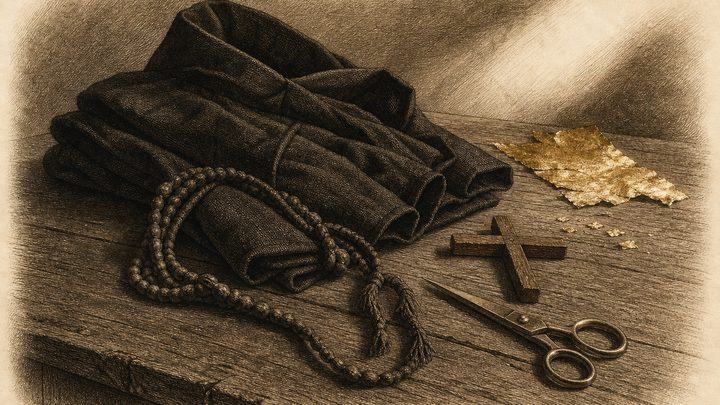
Orthodox monastics promise three things at their tonsure: obedience, non-possession and chastity. Some communities add stability, the promise to remain in one house. Non-possession means that the monk owns nothing of his own; his cell, his books and his clothes are held with the permission of the abbot. Chastity means celibacy, a lifelong offering of love and attention to God without a family of one's own.
Obedience is the root of the three, and is explained in detail in What is obedience in an Orthodox monastery? The vows are taken at stages, from novice to the first degrees of tonsure and then to the great schema, and the stages are described in The stages of monastic tonsure.
The vows are not vows of misery. The tradition says that they are a way to stop being owned by one's possessions and desires. It is also often said that the monk is not dead to the world but dead to his own will, and so free to love.
How does someone become a monk or nun in practice?
No one is received at the door. A man or a woman who wishes to enter a monastery usually visits for some time, speaks with the abbot or abbess and with a confessor, and then is accepted as a worker or trudnik. After a trial period the person is clothed as a novice, who lives under the rule without vows. The period is commonly three years or more; the Church wants the decision to be free and well-tested, and it permits a novice to leave.
Only after this does the tonsure take place, and in the Orthodox Church it is a solemn rite of the Church and not a private promise: the person is clothed, receives a new name and begins a new life. The stages differ between traditions, but the principle is the same, namely that one should not be hurried.
Many monastics enter as adults after study, work or marriage that has ended in widowhood. The age of a typical novice varies widely. The monastery will usually ask about family obligations, health and debts, so that a person does not use the monastery to avoid duty. The fact that an Orthodox convert such as Fr Seraphim Rose could found a small brotherhood in California shows that the vocation is not tied to one culture; see Who was Fr Seraphim Rose?
What do monks and nuns do all day?
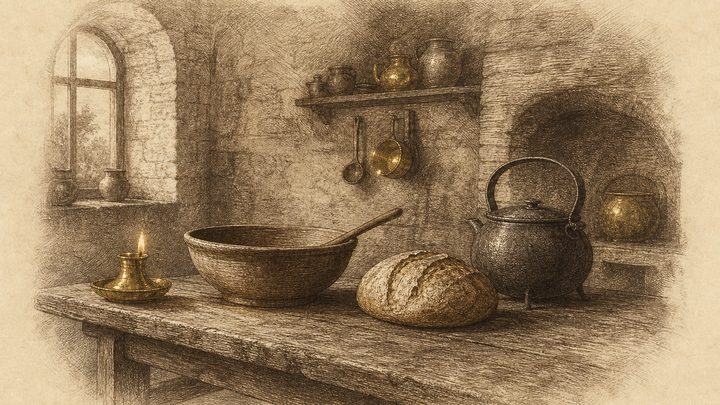
The first task is prayer. The monastic day is built around the services, usually Vespers, Matins and the Divine Liturgy, with the Jesus Prayer and psalter reading in the cell. The work that fills the rest of the day varies with the house: gardening, baking, iconography, bookbinding, hospitality, teaching and the care of the sick.
Monastic prayer is not only for the monk's own benefit. The monk prays for the whole Church and for the world, for the living and the departed, and the monasteries have long kept lists of names for this purpose. An ordinary layman who asks a monastery to pray for a sick relative is using this ancient service; see Why Orthodox Christians pray for the dead. The tradition speaks of the monastic life as “angelic”, because the monk tries to give his day to praise as the angels do.
Elders and abbots in monasteries are consulted by lay people, who find in them a form of counsel they do not find elsewhere. The nature of this role, and its dangers, is described in The spiritual father and the elders.
What can someone outside a monastery take from monasticism?
Most readers will not become monks, and the Church does not ask them to. The monastic tradition is nonetheless a gift to everyone. It keeps alive the idea that prayer is a form of work, that silence is a discipline and that possessions are a means and not an end. A layman who keeps a daily rule of prayer, practises hospitality and fasts according to the Church is borrowing from the monastery.
If you are drawn to the monastic life yourself, the sensible first steps are modest: ask your parish priest, visit a monastery as a pilgrim, speak with a confessor and, above all, do not decide in a hurry. Monks themselves say that the first year of a call is usually the year of doubts, and that a vocation shows itself over time. A person coming from another religious background may also find it useful to read Eastern religions and the Western seeker, which compares the Christian path with other forms of renunciation.
You can follow a monastery's rhythm from far away: the liturgy page and the church calendar show the feasts and fasts that monastics keep, and the Audio Bible has the Psalms that they sing. The book Everyday Saints and Other Stories gives a view of one monastery's life that touches several of these themes, though this article rests on Scripture and the Fathers rather than on the book.